January 9, 2014

Badges and buy-in

In November, I presented on digital badges to the University-Wide General Education Committee (UWGEC) that I am an advisory member for on behalf of the library. My colleague and I have finished our multi-semester course pilot where we used digital badges with content in the library's one-credit course for undergrads, and now we are looking to expand to greater campus and also gather faculty feedback. If faculty don't find value in digital badges, we won't get very far.

The reason I chose the UWGEC committee to present to is because all new gen ed courses are required to explain how information literacy (and other critical skills) will be incorporated into their class. There were a few applications that came through where it seemed faculty were unsure of how to either include IL skills in the class or just how to describe how IL skills would be included in the class. We do have a list of the (soon outdated) ACRL standards to help guide instructors, but there are of course issues with the standards, aside from them not really being intuitive to someone who is not a librarian. Additionally, since we don't have a FYE program, incorporating IL skills at the Gen Ed level would reach more students earlier on.

When badges can be embedded into courses, instructors can more actively understand IL concepts and skills that their students will need and map IL to current course design. Faculty were very excited to hear about this possibility of a mix and match digital badge option for including research skills in their courses. This wouldn't require much additional instruction time on their part, and everyone (faculty and the library) would have access to assessment data. Prior to this presentation, it felt badge talk on campus was stalled or even non-existent, but I found some interested instructors to become part of our Pilot Part II, and was also invited to another working group on campus to include digital badges in eportfolios (actually very similar to what UC-Davis has announced).

Some key points to consider that worked for me when presenting on badges to faculty:
  • Focus less on gamification when introducing the concept and more on measuring skills and competency-based education
  • If your campus is like ours and upper course level faculty complain that students are lacking research skills when they reach them, highlight how embedding skills early and through scaffolding throughout students' college years will benefit all in receiving better work and helping students be better prepared
  • Share as much student feedback as you can. If students are enthusiastic, faculty of course want to use methods students will enjoy and be successful at
  • Stress flexibility and cooperation. We are not giving campus mandatory modules that they have to incorporate into every class, it's a mix and match as I mentioned above where badges would be incorporated into classes based on content, skill-level, and need. We want to be strategic and not create more work for ourselves or faculty (or students)
  • Reiterate student anxiety on finding jobs after graduation, and how being able to display and describe specific skills could give them an advantage with future employers while also helping students better understand what they have accomplished

And I'll share some student feedback from our pilot:
“I liked when I did really well on a task when I got a badge for it”
I liked badges because they helped me feel accomplished and as if I was doing something worth while”
It was more fun than just completing a written assignment”
I enjoyed that the badges … were useful in keeping track of my work, but also of what I learned [and] that most of the time they made us really reflect and put our knowledge of the subject to use”
In order for me to complete assignments, I have to break them down into tasks. With the badges this was already set up for me. I found it fit into my learning style perfectly and I loved how I could track what I was doing within each badge”

University of Arizona Libraries: LIBR197R Badges Pilot survey


We will be analyzing our data for these two semesters and then will be starting another pilot for spring if all works as planned and presenting on our findings at ALA Annual 2014 in Vegas. I don't think there is a date or time set yet but the title of our presentation is: But did they learn anything? Using digital badges to create customizable learning experiences for motivation and assessment. Hope you'll join us! It will be an interactive session where audience members will start putting a badging system together for their institutions (and this is through LITA).

October 31, 2013

Adding another piece to the library + student retention puzzle

image from www.businesscontinuityjournal.com
Grit has become a big, flashy word over the last year or so, in regards to instilling adaptive learning in students and building resiliency. The idea is that students who are able to adapt and bounce back from failure are able to learn from mistakes, being more likely to stick around in school when they are faced with challenges.

In looking at educational psychology literature, and is becoming more widely known through research on positive effects of gaming, experiencing failure supports adaptive learning. Rohrkemper and Corno (1988) highlight the problematic duality of failure versus success, where failure is always bad and success is always good. This in fact is not true, where constant success can be detrimental and failure can improve performance (that is, learning from failure). Focusing on how students think, rather than what they know, is one step in the right direction, along with modeling adaptive behavior, and teaching students to understand that tasks and learning can be malleable. In library instruction, this reminds me of what Pegasus Librarian (I believe?) mentioned in regards to providing students with a "dirt-view" of research (I can't find this post, I'm thinking it could have possibly been an episode on Adventures in Library Instruction). But basically, where we show students research takes work and builds on failure, and it's almost hilarious when we show students practiced, perfect searches because that is not how research works at all. Kluger and DeNisi (1996) support this notion of learning through failure by arguing that after doing an enormous meta-analysis of feedback interventions research, the conclusion is that the feedback literature is inconclusive and highly variable based on situations and learners involved. They explain that learners are most successful in learning through discovery, rather than feedback, particularly controlling feedback (ahem, grades).

Brownell (1947) advocated for teaching meaning in arithmetic, typically a rote, "tool subject." You'd think the argument of teaching meaning would be quite clear, especially in 2013, but this debate continues in some ways. We can see the shift in information literacy, it seems there is more agreement now to move away from navigation and clicks ("bibliographic instruction") to teaching students a more holistic understanding of research in "information literacy." Barbara Fister, as always, is very eloquent in how she explains the importance of this. But really this is another avenue to instill resiliency in students, by focusing on higher order thinking (though, higher order thinking is not always appropriate in every context), we truly are looking toward students' process rather than having interest only in final product. As Brownell explains, teaching meaning provides a greater context for students to find value in the particular subject being taught. With all the difficulty librarians can have regarding one shots (this model could/should change) in building connections with students and improving motivation for students to learn aspects of the research process, providing deeper knowledge about why, and not just what and how, can improve the learning environment.

I was going to next talk about how to provide successful feedback, because it is important, but to avoid making this post so long that no one actually reads it, I just want to wrap up with whether in a class (credit-bearing, one-shot) or through more auxiliary approaches, libraries should be places for students to build grit and resiliency through exploring failure. We talk about how orientations are important for students to develop a social connection and feel comfortable somewhere on campus, and this is a very important aspect of retention, but these safe spaces should also provide opportunities for students to take safe risks and learn how to adapt to failure. This doesn't necessarily mean libraries need to gamify the whole library or offer badges as a panacea for solving student retention or student motivation concerns, but these are examples of methods that could prove useful. Setting up other opportunities in the library for students to test out ideas are ways in which to draw them in and instill adaptivity. Hopefully they are also getting opportunities for safe failure in their campus-wide courses, but it's certainly not a guarantee. Libraries should think about how we can provide opportunities for safe risk in a variety of ways, whether it's instruction, programming, collections, or UX. It's one step in figuring out how we can support student retention initiatives on campus and demonstrate value.

--
Brownell, W. A. (January 01, 1947). The Place of Meaning in the Teaching of Arithmetic.The Elementary School Journal, 47, 5, 256-265.

Kluger, A. N., & DeNisi, A. (January 01, 1996). The Effects of Feedback Interventions on Performance: A Historical Review, a Meta-Analysis, and a Preliminary Feedback Intervention Theory. Psychological Bulletin, 119, 2, 254-284.

Rohrkemper, M., & Corno, L. (January 01, 1988). Success and Failure on Classroom Tasks: Adaptive Learning and Classroom Teaching. The Elementary School Journal, 88,3, 297-312.

October 10, 2013

TMI Instruction and Student Retention

In my Educational Psychology course I'm taking this semester, we were discussing effectiveness of instructor transparency on student motivation. Because people ascribe more positive attributes to others who appear "warm" (rather than "cold"), it seemed like it could be a good thing to be forthcoming with personal information to students. For example, how an instructor had a hard time learning x subject and overcame it, or even addressing if an instructor received negative reviews on TCEs, etc. My opinion was to not show much weakness. You can really hurt your credibility with students who are looking to you as an expert on a topic and the authority figure for the classroom if you try to take yourself down a few notches to be on the same level as them. It sort of makes me think of He's Hip. He's Cool. He's 45! From Kids in the Hall:


Edit: @kellymce pointed out this is another good example (and a much better one, I think!):


Students can sniff out a try-hard. Sometimes I'm tempted to share, particularly when I'm working with student retention-related groups, that I dropped out of college for awhile and also hated using the library and didn't care to ever learn. But I don't! Because I'm supposed to be the authority in the class and I'm in charge. Can you imagine if you went to a therapist and they started telling you about all their psychological issues? Their credibility would be shot, and it would also be very confusing as to why they are sharing this information. As instructors, we are there to teach a particular subject and guide students to learning. We can relate to them in small ways, in a mentor-ish capacity, but emptying out the closet skeletons is not an effective way to motivate or draw students into learning.

Anyhow, these are my thoughts and I realize how strong they are after reading this article that came out today on Inside Higher Ed: TMI from Professors (study indicates role of over-sharing by professors in encouraging uncivil student behavior). Apparently, students are less likely to behave well in class if you try and rap with them (as in the outdated 70s slang for talk/relate to). Check it out, interesting stuff.
"When students reported that their instructors engaged in a lot of sharing about their lives -- particularly stories about past academic mistakes, even stories designed to stress that everyone has difficulty learning some topics -- there is an immediate and negative impact on classroom attitudes."

September 9, 2013

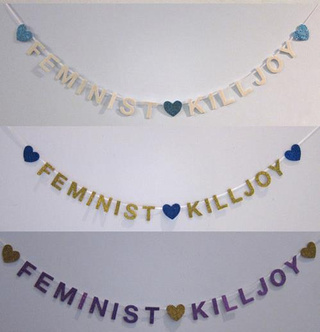
Reflection on Feminist Pedagogy for Library Instruction (book)

image from powderroom.jezebel.com
I just finished reading Maria T. Accardi's Feminist Pedagogy for Library Instruction (Library Juice Press, edited by Emily Drabinski). Aside from it resonating with me because I do try to employ critical library instruction and feminist pedagogy when I can, a lot of what Accardi discusses in the book also relates to what I'm doing with digital badges and also student retention.

First, for some background, Accardi explains that feminist pedagogy resides within critical pedagogy. Feminist pedagogy might carry the misconception of being instruction about women and feminism. Although it can often be related to that and employed in women's studies courses, it can be integrated in any form of curriculum. It typically exposes students to issues hidden in society, particularly injustices based on race, class, ability, sexual orientation, etc., and of course gender. Accardi quotes bell hooks (1994) for a concise description: "Feminist teaching techniques are anti-hierarchical, student-centered, promote community and collaboration, validate experiential knowledge, discourage passivity, and emphasize well being and self-actualization" (hooks in Accardi, p.31). To explain this further, it's to help students develop a critical consciousness and be able to take action on their learning.

So I wanted to look at some of the work I'm doing through this lens after this book made me think more clearly about what I am trying to accomplish.

Digital Badges: one of the issues I'm really struggling with for our badges are in scalability. There is a conflict between reaching many with limited FTE (meaning having automatic assessments that don't require intervention) versus reaching fewer, but retaining the ability to provide meaningful feedback and interact with students. One thing about badges is that typically they are awarded for rigid criteria. In a sense they need to be because a badge means something specific and ascribes value to a particular skill. So, if you have no concrete way of measuring this skill to determine if a badge was "rightfully earned" or not, what does it even mean if anyone or no one can actually obtain it? On the other hand, I believe students need to create their own learning and be proactive (feminist pedagogy), and I don't believe there should necessarily be an authority figure telling them what is right or wrong in absolute terms. Obviously, I know more about information literacy than they do, so I would need to develop content, etc., but as Accardi explains, feminist pedagogy is about being a guide and a facilitator rather than an all-knowing "sage-on-the-stage." A lot of the badges I have created focus on affective outcomes, students developing their own meaning of content, and opportunities for reflection and relating material to students' own lived experience. It's difficult enough to measure this as it is, let alone within the more rigid confines of a badge rubric. Not all badges need to be this way, but when attempting to design a suite of badges for campus, making as many automatic as possible without intervention on a 40k campus with 10 FTE instruction librarians tends to be more desirable. Using an automatic multiple choice quiz to determine skill acquisition is an easy, yet banking-model-esque method to award badges at scale. So something here I am trying to figure out is how to use feminist pedagogy but be simultaneously efficient? I'm working on some ideas for this, but it's certainly a point for discussion. How do you reconcile this in your teaching, particularly when instruction is for high numbers of students?

Student Retention: another area that I focus on. How conflicting that student retention is measured in rigid, big data and explained ROI, but it turns out some of the most effective methods to retain students include providing opportunities for personalization, social involvement, and affective learning outcomes. A lot of the instruction I do, and particularly for student success courses and "at-risk" groups includes promoting greater awareness and comfort in the library, rather than an explicit focus on content. I think student retention work would benefit greatly from feminist pedagogy, as would library instruction in general based on the high anxiety many students feel when using the library (and as Accardi does touch on).
This is my brief rundown of my most current thoughts from reading this book. I thought it was a great introduction to understanding feminist pedagogy and how it can be applied to library instruction. Accardi talked about her experience with the ACRL Immersion Program and also talked about issues with ACRL Standards, which I'd like to address in another post.